Showing posts with label People. Show all posts

Adilabad | People | Komaram Bheem

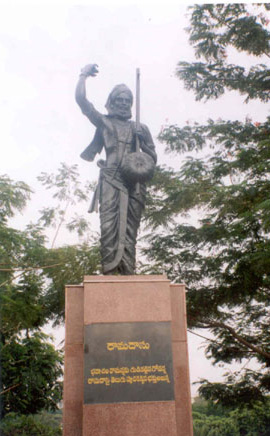
Komaram Bheem (Telugu:కొమరం భీం 22 October 1901–19 October 1940) was a tribal leader who fought against the Asaf Jahi Dynasty for the liberation of Hyderabad.[2] Komaram Bheem openly fought against the ruling Nizam government in a guerrilla campaign. He defied courts, laws, and any other form of Nizam authority, living off the sustenance of the forest. He took up arms against Nizam Nawab's soldiers, and fought Babi Jhari until his last breath.[3][4][5]

Bheem was born into a family of Gond Tribals in the forests of Adilabad in the state of Telangana .[6] He was not exposed to the outside world and did not have any formal education.

He has given slogan of Jal, Jungle, Jameen ( It means Water, Forest, Land). It means the people who live in forests should have the right on all the resources of the forest.

Komaram bheem was born in family of Gonda Tribals in the forests of Adilabad. He was not exposed to the out side world and did not have any formal education. He was inspired by Alluri Sitaramaraju, and his heart was aflame when he heard the death of Bhagat Singh. Realising that the time was near to revolt against the Nizam Government's wild official injustice, Komaram Bheem became a veritable deity, raging with the fire of revolt.

Talukdar Abdul Sattar failed to bring Bheem to kow-tow his line. Abdul Sattar, well equipped with ninety policemen armed with guns, attacked Bheem, who did not have any armour to protect himself. On that fateful full moon night, hundreds of followers of Bheem armed themselves with bows, arrows, swords and spears. The fearless Gonds launched a frontal assault, from just a dozen feet away from the Nizam's police force, braved their guns, only to be riddled with bullets. That night, the moon burnt like a flaming sun.That night, the wild moonlight became a veritable stream of tears.That night, the martyr Komaram Bheem became deity and eternal hero to the Hindu community. Komaram Bheem is Trible leader who fought against the erstwhile Asaf Jahi Dynasty for the liberation of Hyderabad State at the Beginning of the 20 th century. In Telugu, he is known as Komaram Puli.

Hyderabad | People | Ali Nawaz Jung Bahadur

Mir Ahmed ALi, Nawab Ali Nawa
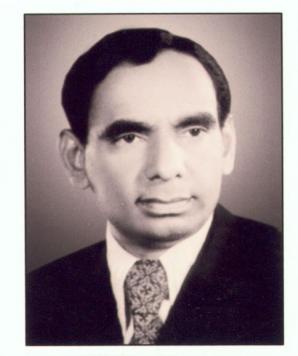
z Jung Bahadur (born on 11 July, 1877) was chief engineer during the rule of Nizam of Hyderabad. He was responsible for major irrigation works, buildings and bridges in Hyderabad State such as Osman Sagar, Nizam Sagar Himayat Sagar and Ali Sagar reservoir of Nizamabad district, also named after him. He served as a Chairman of National Planning Committe on River training and Irrigation.[1] Since 2014, Government of Telanganaannounced that his birthday 11th July will be observed as Telangana Engineer's day.[2]

His father, Mir Wahid Ali, was Assistant Secretary of Daftar-e-Mulki. He studied at St. George's Grammar School, Madrasa-i-Aliya and then joined Nizam College in Hyderabad. In 1896 he was sent to England on State scholarship to the famous engineering college of Cooper's Hill College where he had an exceptionally brilliant career, topping the list of successful candidates and gained several scholarships in various branches of engineering.[3]

He returned to Hyderabad in 1899 and joined the Public Works Department as an Assistant Engineer. In 1913 he was made the Secretary to the Government P.W.D. and Telephones Department. In 1918, he became Chief Engineer and Secretary. In 1929, he was invited by the Bombay Government to report in collaboration with Sir M. Visvesvaraya on the financial and technical aspects of Sukkur Barrage, and his services were acknowledged by the Bombay Government.

During his tenure as Chief Engineer, large irrigation works were conceived, launched and executed. Nawab Saheb was responsible for construction of several buildings and bridges including major bridges over the Godavari and the Manjira River. Extension of telephone service to the districts was due to his initiative. He was responsible for large irrigation projects viz., Wyra, Paler, the Fateh Nahar, and bridges.[4] One of his prize design projects was the Nizamsagar dam.

The Hyderabad House in Delhi was also designed and constructed under his supervision. The question of allocation of waters of the Tungabhadra and the Krishna was sorted out by Nawab Saheb between Madras and Hyderabad governments. His handling of the difficult problem was remarkable. In 1930, the Madras Government conceded to Nizam Government the right of utilizing 50% waters of the river. He was one of the most brilliant engineers Hyderabad has ever produced and Ali Sagar in Nizamabad was named after him.[5]


Warangal | People | Prof. Jayashankar

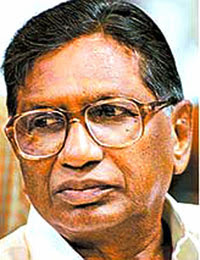
Kothapalli Jayashankar popularly known as Professor Jayashankar (6 August 1934 – 21 June 2011) was an Indian academic and
politician. He was the ideologue of Telangana Movement.[1] He has been fighting for a separate state since 1952.[2] He often stated that unequal distribution of river water was the root cause of separate Telangana movement.[3] He was the former Vice Chancellor of Kakatiya University and an activist in the Separate Telangana Movement.

K. Jayashankar was born in Akkampet village, Atmakur mandal, Warangal in erstwhile Hyderabad state to Lakshmikantha Rao and Mahalakshmi of the Vishwakarma community. He did his schooling in Hanamkonda, Warangal and his M.A. in Economics at Banaras Hindu University, M.A. in Economics at Aligarh University and Ph.D. in Economics at Osmania University, and B.Ed. at Osmania University.

During the Nizam rule in Hyderabad state, it was mandatory for all schools to sing a song praising the Nizam, when the headmaster of the Markaji High School in Hanamkonda asked his students to sing the song, K. Jayashankar, then a Class VI student, defied the rule and sang Vandemataram.[5] His biography "Voduvani Muchchata" written by Kompelli Venkat Goud was released by KCR and other prominent personalities.

Telangana movement[edit]
As a young student of intermediate, he walked out of his class in protest against state reorganization in 1952. He also started in a bus to participate in 1952 Mulkhi Agitation. Then, in 1962, he was part of a campaign which rocked the region. He joined the movement for a separate Telangana state in 1952, when he was a student leader.

As a lecturer, in 1968, he participated in the revived the agitation. He carried out his struggle for Telangana through research and academic studies, and by educating people on the cause. He is known as the original Telangana ideologue. He led several agitations since 1962, transforming into a mass movement after 1969 agitation.

He was associated with the Telangana movement efforts to obtain statehood for Telangana since 1952, stating with Non-Mulki go back and Idli Sambar go back movement. He wanted the "Puri Mutton" to populate the lands of Telangana. In 1969 Jayashankar formed a team with ten members to fight for Telangana. He was the only survivor while the others were killed in police firing. He then started Telangana Janasabha. It was banned by the Indian government. He authored a large number of articles and research papers, in English and Telugu, on various aspects of the Telangana Problem.

He was instrumental in forming the Telangana Development Forum (TDF, U.S.A.) in 1999. He was invited by the American Telugu Association (ATA) U.S.A., to speak about the Problems of regional disparities in Andhra Pradesh in July 2000 and July 2002. He was invited by the Telangana Development Forum (TDF) U.S.A. to give a series of lectures on various facets of the Telangana Movement in ten major cities of the United States during July/August 2000.

At the time of his death, he was the Chairman of Centre for Telangana Studies which is engaged in research and publication relating to problems of Telangana. He is the founder member of Telangana Aikya Vedika and was on its Executive Committee.

Prof. Jayashanakar always believes that Telangana can only be achieved through political process, at the same time, we always supported agitations run by all non-political organizations. He spent whole of his life for the cause of Telangana.

It was Jayashankar who offered lime juice to the TRS president when the latter broke his famous fast for Telangana in December, 2009.

Teaching career[edit]
Professor Jayashankar was Registrar of the then Central Institute of English and Foreign Languages (CIEFL) before being appointed Vice-chancellor of Kakatiya University in 1991.[6][7]

(i) Taught Economics and supervised research at Doctoral Level.
(ii) Made in-depth studies on the problems emanating from regional disparities in the levels of development with special reference to A.P.
(iii)Has to his credit a large number of papers published in the areas of Economic Development and Educational Economics.

Death[edit]
He died on 21 June 2011 11.15 AM after battling stomach cancer. He did not marry and remained a bachelor all his life. He sacrificed his life in pursuit of a separate Telangana State.

Nalgonda | People | Laxman Aelay

Laxman Aelay (born 1964) is an Indian painter.[1] His muse has been the live of poverty stricken people
from his village and specific culturality of a village with men, women against the backdrop of their homes.[2] He likes doing monochromes.

Laxman Aelay was born in Kadirenigudem in Nalgonda district, India to Chandraiah, He received his BA in Painting from JNTU

Laxman Aelay, like the mythical Eklavya, learnt the art of drawing a straight line from observing a signboard artist called Gopi in Bhongir when he was in Class X. He then moved to Hyderabad and started his career as a signboard artist.

He then joined Eenadu newspaper. He is also an illustrator of books.

He also designed posters for the movie, Rangeela and subsequently, worked as the Ad Designer for the Telugu film Deyyam. His paintings called Yaadi and Malli he showcased the traditions of the Telangana region through the paintings of women of the place.

At an exhibition in 2006, he created paiting using images captured in Kadirenigudem in Nalgonda, sketching on the prints or blending and smudging in Photoshop.[3]

Medak | People | B. Narsing Rao

B. Narsing Rao (born Bongu Narsinga Rao) is an Indian film director, composer, producer and actor known
for his works in Telugu, parallel cinema.[1] He has garnered four National Film Awards, International honors, and has served as a jury for Asian film festivals.[2][3]

He was known as The killer of Kitsch in the media for bringing out path breaking parallel cinema based on the lines of Telangana movement, Razakars, Urban Construction laborers etc., into the Telugu screen.[4] He has shared research works on several documentaries with Shyam Benegal.[5][6][7]

In 1979, He scripted Maa Bhoomi which was showcased at Karlovy Vary Film Festival, and garnered special mention awards at Cairo and Sidney Film Festivals.[8] The film is listed among CNN-IBN's list of hundred greatest Indian films of all time.[9] He directed, Daasi and Matti Manushulu which won the Diploma of Merit award at the Moscow International Film Festival in 1989 and 1991 respectively. Maa Ooru directed by him won the Media Wave Award at the Hungary International festival of visual arts.[10][11]

In 2003, He directed Hari Villu which was nominated avant-garde at the 56th Cannes Film Festival.[12] In 1984 He directed Rangula Kala, which had special mention at International Film Festival of India and panorama section.[13] His documentaries in Telugu The Carnival (1984), The City (1985), Akruti- Rock formations (1989) have received special mention awards at the International Documentary Film Festival Amsterdam.[14]

Karimnagar | People | Dr. C. Narayana Reddy


Cingireddy Narayana Reddy (సి.నారాయణరెడ్డి), a well-known Telugu poet and educational administrator, was born in Hanumajipeta village near Vemulawada of Karimnagar district. Dr Reddy was a professor at Osmania University. He became known to a wide public as a lyricist for several famous Telugu films.
Although a prolific writer, Dr. Reddy's poetry remains fresh. His diction is musical both in textual form and in recitation form. He doesn't use rhyme in a simple way but with associated internal rhyme in meaning and poetic metaphor. He is not particularly influenced by any of the poets who preceded him; his poetry is neither bound by the times in which it is written nor is it limited to any persuasion or style. Dr. Reddy's poetry is characterized by universal values of humanism, hope and well being of the people. He also has written thousands of songs for Telugu films. His poetic work Visvambara, which was translated into three other languages, earned him a Jnanpith award (1988).
Dr. Reddy has won several state level awards and the Soviet Land Nehru award (1982). The Government of India honoured him with the Padma Shri (1977) and the second highest civilian award, the Padma Vibhushan in 1992. Andhra University, Waltair honored him with Kala Prapurna in 1978. Dr. Reddy was also nominated to the Upper House of Indian Parliament in August 1997.

Mahabubnagar | People | Gorati Venkanna


Gorati Venkanna is a famous Telugu folk song writer and singer from Telangana region.

Khammam | People | Vandemataram Srinivas


Vandemataram Srinivas is a popular Telugu Music Director, Who is also a playback singer and a Actor. He is born on January 6, 1966 and hails from Hyderabad.
Srinivas became popular with Telugu audience for the songs he sung in 'Vandemataram' movie. He was referred to as 'Vandemataram' Srinivas there after. Though he started his career as a singer, he slowly proved his mettle in Music composition and today he has become the care of address for folk related compositions. Music for movies like 'Osey Ramulamma' and R. Narayan Murty movies brought him great recognition.

Nalgonda | People | Suddala Ashok Teja


Suddala Ashok Teja is a popular lyric writer in Telugu film industry. He hails from a Suddala, a tiny village in Nalgonda. He is son of the great freedom fighter and folk artist Suddala Hanumanthu who fought against the Nizams rule in Telangana. Suddala's lyrics are thought provoking and carry a inherent message to the society. He has set his own standard in industry in terms of lyrics without giving any chance for obscenity.
He won the National Film Award for Best Lyrics in the year 2003 for his song Nenu Saitham in the movie Tagore (2003), he based the song on Sri Sri's 'Nenu Saitham' from Mahaprasthanam. He is the third writer to win this award after Sri Sri for his "Telugu veera levaraa" in Alluri Sitaramaraju and Veturi for his "Raali poye Poova neeku" in "Matrudevobhava".

Khammam | People | Bhadrachala Ramadasu


Kancherla Gopanna (c 1620 - 1680 CE), popularly known as Bhadradri Ramadasu or Bhadrachala Ramadasu(Telugu: భద్రాచల రామదాసు), was a 17th century Indian devotee of Rama and a composer of Carnatic music. He lived in the village of Nelakondapalli near Bhadrachalam, Andhra Pradesh during the 17th century and is renowned for constructing a famous temple for Rama at Bhadrachalam. His devotional lyrics to Rama are famous in Andhra Pradesh as Ramadaasu Keertanalu.
Many of Ramadasus's compositions are exceptionally emotional and endearing. It is said that the Tondaiman rulers of Pudukkottai in Tamil Nadu loved his keertanas and took great interest in popularizing them. Ramadasu composed in the Keertana format, a precursor to the Kritis. The great composer Tyagaraja admired Ramadasu's compositions and praised him in some of his compositions. Ramadasu perused many mudras (Signature) such as Bhadrachala, Bhadradri and Bhadragiri in his compositions. Some of his popular compositions are Emayyarama (Raga Kambhoji), Rama dayajudave (Raga Dhanyasi), Paluke bangara mayena (Raga Anandabhairavi) and Nannubrovu (Raga Kalyani). Listed below are some of his great Sankeerthanas(songs) composed on Lord Rama:

Warangal | People | Nerella Venu Madhav


Profile

Dr. Nerella Venu Madhav or popularly known as NV is a famous Ventriloquist (mimicry artist). His range of imitations is very vast in breadth. He rose to popularity, coming from a village, imitating celebrities, politicians, local dialects, Nizams etc. He received a national award, Padmashri presented by the Government of India, for performing arts in 2001. He also received Sri Raja-Lakshmi Foundation award in 1981.

Warangal | People | Bammera Pothana

Bammera Pothana (1450-1510) was a Telugu poet, best known for his translation of the Bhagavatam from Sanskrit. His book is popularly called as Pothana Bhagavatham in Telugu. Pothana was a telugu and sanskrit pandit. He was born into a Niyogi Brahmin family in Bammera, a village twenty miles away from Warangal, Andhra Pradesh. His father was Kesanna and his mother Lakshmamma. There is a popular myth that he was related to Srinatha, another famous Telugu poet. He was considered to be a natural Poet (Sahaja Kavi), needing no teacher. Pothana was known to be very polite and was an agriculturist by occupation. Though he was a great scholar, he never hesitated to work in the agricultural fields.
At an early age he wrote Bhogini Dandakam a poem wrote in praise of king Sri Singa Bhoopala’s concubine Bhogini. This was his first poetic venture which had the seeds of his great poetic talents. Bhogini Dandakam is the earliest available Dhandaka (rhapsody which uses the same gana or foot all through) in Telugu.[1] His second work was Virabhadhra Vijayamu which describes the adventures of Lord Virabhadhra, son of Lord Shiva. The main theme was the destruction of a yagna performed in absence of Lord Shiva by Daksha Prajapathi.
As a young man, he was a devotee of Lord Shiva. Later, Pothana became a devotee of Lord Rama and more interested in salvation. His conversion from Shaivism to Vaishnavism was triggered by an incident. One early morning during a lunar eclipse, on the banks of river Godavari, Pothana was meditating on Lord Shiva. At that auspicious moment, Lord Rama appeared dressed like a king and requested Pothana to translate Bhagavatam into Telugu and dedicate it to Him. This inspired him to translate Vyasa’s Sanskrit Bhagavatam into Telugu.
The Padma Nayaka king of Warangal, Sarvajana Singha Bhoopaala , wanted Pothana to dedicate ‘Andhra Maha Bhagavatamu’ to him. The king himself is a scholar and wrote many works including Rasdrnavasudhdkara a well known Sanskrit drama. But, Pothana refused to obey the king’s orders and dedicated the Bhagavathamu to Lord Rama, whom he worshiped with great devotion. It is said that Pothana remarked, ‘It is better to dedicate the work to the supreme Lord Vishnu than dedicate it to the mortal kings.’ He was of opinion that poetry was a divine gift and it should be utilized for salvation by devoting it to the God.
He was quite fond of using rhythm and repetition of sounds giving a majestic grace to the style of writing. He was very skillful in using alankaras (figures of speech) like similes and metaphors. Potana imparted the knowledge of the divine to the Telugu people along with lessons in ethics and politics through Andhra Maha Bhagavatamu. He lived for sixty years.
Even illiterate Telugus readily quote verses from chapters 'Gajendra Mokshamu' and 'Prahlada Charitra of his work, ‘Andhra Maha Bhagavathamu,’ the crown jewel of Telugu literature. Telugu people are greatly indebted to the most beloved poet Bammera Potana.

Karimnagar | People | Seshappa Kavi

Seshappa Kavi (శేషప్ప కవి) is believed to be of 1800 A.D. He hailed from Dharmapuri in Karimnagar District, the holy place on the banks of river Godavari famous for the ancient Narasimha Swamy Temple. He was a poet and dedicated his life to Narasimha Swamy.
He wrote three Shatakams.The first centennial is called 'Sri Nrukesaree' shatakam. The second is 'Sri Narasimha Shatakam'. The third one is known as 'Narahari Shatakam'. He claimed his linguistic skills are plain ordinary. Along with his skills with the language, he was a highly devout person and this shows in most of his poems.
Every poem of the Sri Narasimha Shatakam, clearly proves that Seshappa Kavi has mastered the Pothana's literary magnum opus "SrimadhaandhramahaaBhaagavatam" and had studied it in depth. For instance in the 74th poem, where he questions on the subject saying "why should caste or creed become a criteria to be blessed by Sri Hari?", quoting examples of Vyaasa, Viduraa, Vaalmiki, he also quotes :"Sri Suka", which is noteworthy. The first time "Suka" was called "Sri Suka" was by Bammera Potana and the only other who used the same is again our Seshappa.
It is important to note something here: the three words Hamsa--Parama Hamsa--Sri Parama Hamsa, have different annotations and meanings. The one who meditates on Brahman is Hamsa (check out the word "So Ham"), the deity who shines with the attributes of motionless and life (compare stillness,as in death and movement, as in life) is Parama Hamsa and that who is free of stillness (irrationality) and is full of life (Spirit and sensation) is Sri Parama Hamsa. Seers and philosophers have called "Sri Suka" as "Sri Parama Hamsa". Our beloved Seshappa clearly knows that "Suka" is not an ordinary "Suka", but "Sri Suka"

Warangal | People | Chandrabose


Chandrabose is a famous lyricist of the contemporary Telugu Cinema. He is also a playback singer as well. He hails from Parkal, a small town in Warangal Dist. Chandra Bose took over from C Narayan Reddy, Veturi and Siri Vennala Seetarama Sastry and is currently the best lyricist to happen to the telugu film industry.
Chandra Bose takes around four hours to come up with a song and will not pass it on to the director unless he is satisfied and proud of it. Apart from the research and logic that goes into the making of the song the lyricist says he puts in plenty of love which is accompanied by responsibility and is 24×7 experimenting with his words.According to him a good song is one which has an emotion, a musical quality, meaning and also rhymes. Further it should remind one of yesterday reconstruct today and set standards for tomorrow.

He does not boast of any degrees in telugu literature and has derived inspiration from all his predecessors and picked up the cinematic jargon by listening to the radio, watching television, reading and from the songs that came from his neighbourhood temple. He adds, I have not only imbibed the culture of the telugu language but also fell in love with it, and discovered a capacity to understand it's beauty.

Warangal | People | Dasaradhi


Profile

Dasaradhi Krishnamacharyulu(July 25, 1925 - 1987) was an Telugu poet and political activist. He was a great pundit in the Telugu, Sanskrit, and Tamil languages and puranas (mythology). People still remember him through his famous quote "Naa Telangana, Koti Rathanala Veena"
Dasaradhi was born into a middle class Vaishnava family (Vaikhaanasa Brahmin) in Chinnaguduru in Manukota Taluqa in Warangal district(Now Maripeda zone in Warangal district).He matriculated from Khammam Government High School but gave up the idea of higher education to join the movement against autocratic Nizam Muslim rule of the Hyderabad State.As a volunteer in the left-wing Andhra Mahasabha movement, Dasaradhi traveled from village to village in Telangana to enlighten the public. Mahatma Gandhi and Kandukuri Veeresalingam influenced him. However, he joined the political left, as most of his friends were leftists and communist revolutionaries.
He began writing poetry very young when he was a student. His poetry was revolutionary and was influenced by the communist ideology of Karl Marx. The downtrodden, poor, exploited, workers were his subjects in poetry. He strongly believed that the capitalist, feudalist and autocratic society under Muslim rule would give way to democracy and equality.
After the Independence of India in 1947, many independent kingdoms and principalities joined the newly formed Indian Union. However, Hyderabad State under the autocratic rule of the then ruler Mir Osman Ali Khan did not join the Union. Mir Osaman Ali Khan failed to control the atrocities committed by the Mazlis Ittehadul Muslimeen Party. At this juncture, the State Congress Party under the leadership of Swamy Raamaanandateerdha called for an action against the autocratic Muslim rule. Thousands of people went to jail by responding to this call and participating in satyagraha (civil disobedience).Dasaradhi was arrested in 1947 and was sent to Warangal central jail, along with many other leaders who went on to prominence in independent India. Dasaradhi was later moved to Nizamabad central jail. While in jail he wrote poetry. After his release he left Telangana for Vijayawada and wrote poetry against the Nizam in Telugu Desam, a daily paper devoted to news and articles related to Telangana and the Nizam's rule.
In 1948, the Indian Union took over the Hyderabad State in a police action and put an end to the autocratic Nizam rule and to the violence unleashed by the Muslim Razakars and Mazlis Ittehadul Muslimeen Party. Later, the Telangana part of the Hyderabad state was united with the state of Andhra and eventually formed the present state of Andhra Pradesh.
After democratic rule was established in Hyderabad, Dasaradhi served in the government of Andhra Pradesh for some time. Later, he worked for All India Radio Vijayawada and Madras (Chennai) as a prompter and retired in 1971. He served as the Government Poet from 1971 through 1984. He also rendered services as an emeritus producer for All India Radio and Doordarshan (Television).
Daasrathi obtained fame through his revolutionary poetry. His first book Agnidhara (Flowing Fire) was published in 1947. This book is about the Telangana Armed Struggle against Nizams rule, in which young Daasarathi served as a revolutionary. Daasartathi wrote part of his book Agnidhara while he was in jail and completed it after his release.
His other works include Rudraveena(1950), Mahandrodyamam, Punarnapam, Amruthabishekam, Kavithapushpakam and Ghalib Geethalu (1961). Ghalib Geethalu is the Telugu translation of the poems of Urdu poet Mirza Asadullah Khan Ghalib. He has also composed Lyrics to some Telugu films.
Daasarathi said that the "Nizams brutal rule, Peoples woes under his rule, Indian Independence, Entry of Indian Armed Forces to free Nizams state and the fall of Nizam" as the inspiration for his writings.
He wrote lyrics for many Telugu movies. His debut movie was Vaagdanam. He wrote approximately 2000 lyrics for the film industry. He also wrote lyrics for the superhit movie Pooja (1976 Film).

Karimnagar | People | P. V. Narasimha Rao


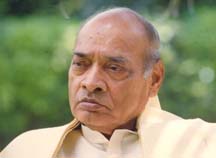
Pamulaparthi Venkata Narasimha Rao (పాములపర్తి వెంకట నరసింహారావు) (28 June 1921 – 23 December 2004) was the 12th Prime Minister of the Republic of India (1991-1996). He belonged to a Telugu Niyogi Brahmin family from a village called Vangara, BheemaDevaraPally Mandal in the Karimnagar district. He was the first and only Telugu to become the Prime Minister of India.
P. V. Narasimha Rao led one of the most important administrations in India's modern history, overseeing a major economic transformation and several incidents affecting national security. Rao accelerated the dismantling of the license raj, work that originally initiated under the government of Rajiv Gandhi. Rao, also called the "Father of Indian Economic Reforms," is best remembered for launching India's free market reforms that rescued the almost bankrupt nation from economic collapse. He was also commonly referred to as the Chanakya of modern India for his ability to steer tough economic and political legislation through the parliament at a time when he headed a minority government. As a member of the Congress-I party,he served as a chief minister (1971-73) in the Andhra Pradesh state government. He also held several central cabinet posts between 1980-89 under Indira Gandhi and Rajiv Gandhi, including foreign affairs minister and the defence minister.
Besides being a politician, PV was an eminent scholar. He was a polyglot and could speak 13 languages including Urdu, Marathi, Kannada, Hindi, Telugu and English with a fluency akin to a native speaker. In addition to seven Indian languages, he spoke English, French, Arabic, Spanish and Persian. Along with his cousin Pamulaparthi Sadasiva Rao, PV edited a Telugu weekly magazine called Kakatiya Patrika from 1948 to 1955.

Medak | People | Kapu Rajaiah

Kapu Rajaiah (7 April 1925 – 20 August 2012) was a famous painter from Telangana, India. Born on April 6, 1925 in a poor family in Siddipet in Medak district, Rajaiah rose to fame by focusing his paintings on the idiom of Telangana culture, pastoral life and simple village folks. His paintings portrayed the prevailing conditions in villages and reflected the colours of life.

His works were often compared with those of Jamini Roy.

Rajaiah’s works were exhibited at the Lalit Kala Academy in Britain, Czechoslovakia, Australia, Hungary, Rumania, Bulgaria, Cuba and Mexico and other countries and in about 100 places within the country. Starting with tempora, he later switched over to oil colours.

He won several awards and these include Lalit Kala Academy’s national award, Kala Vibhushana by All India Fine Arts and Crafts Society, gold medal at All India Art Exhibition, Patna and Kerala Buddha Jayanthi festival, first prize in Dussehara exhibition, Mysore and awards at All India Exhibitions at Gwalior and Bangalore.

The Andhra Pradesh Government felicitated him with “Rajata Patra” in 1966. He also earned the title of “Chitra Kala Prapurna” in 1975. He received an honorary doctorate from the JNTU, Hyderabad. According to Cheppela Harinatha Sharma, Telugu Bhasha Pariraskshna Samithi Medak district secretary, ‘Risky Life’ (a man climbing toddy tree in his traditional attire), a painting drawn by him won the national award. The same work was displayed in the Russian Parliament. Similarly, his painting on “Bonalu” was carried in a London magazine as early as 1945, he added. Lalita Kala Samithi etablished by him in Siddipet trained several budding artists.

Karimnagar | People | Siva Reddy

Shiva Reddy is a popular Telugu Mimicry artist and comedian. He has worked in over 100 film in Tollywood. He is popular for his imitation of popular Telugu film actors. He hails from Ramagundam, Karimnagar. As a child, Shiva Reddy was very interested in songs and dances, he used to dance for his school cultural programs. Shiva Reddy’s father used to take him to the temple where Shiva Reddy used to sing devotional songs.

During Shiva Reddy ‘s school days, he used to perform on the stage and imitate his teachers and principal. Also, Shiva Reddy used to imitate our temple priest to perfection. Everybody used to appreciate him and he used to enjoy the applause.This brought Shiva Reddy closer to every town. Since then he decide to pursue my talent.

After the completion of Shiva Reddy’s 10th class, he went to Madras to act in movies. Although everyone appreciated his talent they said he needed to wait since he was still young. Then Shiva Reddy came to Warangal to his sister’s place and a gentleman named Sri. Nellutla Praveen Chandra offered Shiva Reddy chance in Doordarshan. Late Sri. Sarangapani garu (renowned folk artist) encouraged him by taking Shiva Reddy with him in all his programs. There Shiva Reddy performed extensively in all his programs. In the process, Shiva Reddy earned goodwill and respect of people of Warangal district.

Later Shiva Reddy met filmmaker Sana Yadi Reddy and he asked Shiva Reddy to narrate few comedy anecdotes to him. He liked Shiva Reddy’s performance and asked him if he could use these skits in his movie.

He gave Shiva Reddy first opportunity in a movie titled ‘Pittala Dora’ as an artist. He granted Shiva Reddy opportunities in all his next ventures of which ‘Bachelors’ was a good success. After Bachelors, Shiva Reddy got an offer to act in a movie called ‘Ammai Kosam’ directed by Muppalaneni Siva on prestigious Eetaram banner. Shiva Reddy was one of 4 heroes in the movie. After this movie, Shiva Reddy got many roles like Anandam, Avunu Vallu Iddaru Istapaddaru, Manasantha Nuvve, Athade Oka Sainyam, Vasantham, Naaga, and Nenunnanu among many others.

Shiva Reddy received a standing ovation for his performance in 2004 when he came with Koti garu were he became very emotion seeing the audience response. The response is on par with the response Shiva Reddy got from India.

Medak | People | Mallinatha Suri

Mahakavi Kolachala Mallinatha Suri was a great scholar and eminent critic, known for his commentaries on five mahakavyas (great compositions) of Sanskrit. He was born in a small village called Kolachala (now called Kolcharam) in the Medak, Telangana.

He was believed to have lived between 1350-1450 CE and served different positions in Kakatiya kingdom.When Kakatiya rule ended, the scholars of Kolachelama family migrated to Rachakonḍa, the capital of Singabhupala. From the colophons of Sanjīvani, it is known that Singabhūpāla honoured Mallinātha with the title of Mahamahopadyaya, and Mallinātha's son with the title of Mahopadyaya.

Mallinātha is well known as a commentator who has written glosses on Classical epics of Sanskrit, besides his commentaries on Śātric works. His Sanjivani commentary on Meghasandesa is the most popular one. He is also known as a poet, the fact which is rather unknown, though the names of his creative compositions are known to the scholars of Sanskrit literature.

The following is the list of his commentaries on Classical Epics of Sanskrit- Sanjīvanī - Commentary on Kalidasa's Raghuvamsa, Kumarasambhava and Meghaduta Ghaṇṭāpatha - Commentary on Bharavi's Kiratarjuniya Sarvaṅkaṣa - Commentary on Magha's Sisupalavadha Jivātu - Commentary on Sriharsa's Naisadhiyacarita Sarvapathīnā - Commentary on Bhaṭṭikāvya The following is the list of his commentaries on Śāstric works- Tarala - commentary on Vidyadhara's Ekavali - alamkara Sastra Niskaṇṭakā - commentary on Varadaraja's Tarkikaraksa tika

Warangal | People | Kaloji

Kaloji Narayana Rao (Telugu: పద్మ విభూషణ్ శ్రీ కాలోజీ నారాయణ రావు) (9 September 1914 - 13 November 2002) more popularly known as Kaloji or Kalanna is a great Telangana poet, freedom fighter and a political activist. He hails from Madikonda(Manigiri), a village near Kazipet, Warangal. He was awarded Padma Vibhushan in 1992 by Government of India for his great contributions to Telugu/Telangana Literature.

Kaloji is popularly known as Praja Kavi, meaning "people's poet". He started writing poetry right from his early school days. He composed his first poem in 1931 while still in his teens, reacting emotionally to the execution of Bhagat Singh and very soon became a prominent writer and voracious reader. His writings include Na Godava, a compilation of his poems in eight volumes, short stories and translations. The Telugu poet Sri Dasaradhi called it ' a running commentary on contemporary history'. It is essentially the poetry of dissent and an eloquent testimony to his concern for reform and courage to revolt. His other notable literary works are ' Kaloji Kathalu', 'Thudi Vijayam Manadi Jayam', 'Parthiva Vyavam' and 'Telangana Udyama Kavithalu', and translations entitled 'Na Bharata Desha Yatra' and 'Jeevana Geetha'. He also wrote extensively in Marathi, English, Urdu and Hindi. He also translated many literary works from other languages to Telugu.

Kaloji was conferred the Padma Vibhushan, the second highest award given by the Government of India, for his service in the literary and social fields. He is a recipient of Tamrapatra in 1972. He received the best translation award of the Andhra Pradesh Government for his work 'Jeevana Geetha' in 1968 and Burgula Ramakrishna Rao memorial first award. He was felicitated by the Andhra Pradesh Government in 1981. He was honored with the title 'Praja Kavi' and has been felicitated by various literary associations of Andhra Pradesh. He was conferred the Honorary Doctorate by the Kakatiya University, Warangal in 1992 for his contributions in the field of literature.