Showing posts with label Warangal. Show all posts

Warangal | People | Prof. Jayashankar

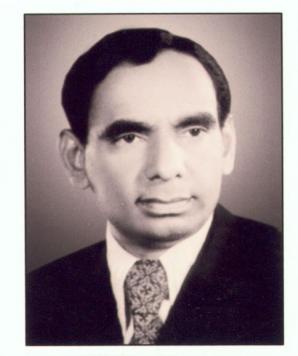
Kothapalli Jayashankar popularly known as Professor Jayashankar (6 August 1934 – 21 June 2011) was an Indian academic and
politician. He was the ideologue of Telangana Movement.[1] He has been fighting for a separate state since 1952.[2] He often stated that unequal distribution of river water was the root cause of separate Telangana movement.[3] He was the former Vice Chancellor of Kakatiya University and an activist in the Separate Telangana Movement.

K. Jayashankar was born in Akkampet village, Atmakur mandal, Warangal in erstwhile Hyderabad state to Lakshmikantha Rao and Mahalakshmi of the Vishwakarma community. He did his schooling in Hanamkonda, Warangal and his M.A. in Economics at Banaras Hindu University, M.A. in Economics at Aligarh University and Ph.D. in Economics at Osmania University, and B.Ed. at Osmania University.

During the Nizam rule in Hyderabad state, it was mandatory for all schools to sing a song praising the Nizam, when the headmaster of the Markaji High School in Hanamkonda asked his students to sing the song, K. Jayashankar, then a Class VI student, defied the rule and sang Vandemataram.[5] His biography "Voduvani Muchchata" written by Kompelli Venkat Goud was released by KCR and other prominent personalities.

Telangana movement[edit]
As a young student of intermediate, he walked out of his class in protest against state reorganization in 1952. He also started in a bus to participate in 1952 Mulkhi Agitation. Then, in 1962, he was part of a campaign which rocked the region. He joined the movement for a separate Telangana state in 1952, when he was a student leader.

As a lecturer, in 1968, he participated in the revived the agitation. He carried out his struggle for Telangana through research and academic studies, and by educating people on the cause. He is known as the original Telangana ideologue. He led several agitations since 1962, transforming into a mass movement after 1969 agitation.

He was associated with the Telangana movement efforts to obtain statehood for Telangana since 1952, stating with Non-Mulki go back and Idli Sambar go back movement. He wanted the "Puri Mutton" to populate the lands of Telangana. In 1969 Jayashankar formed a team with ten members to fight for Telangana. He was the only survivor while the others were killed in police firing. He then started Telangana Janasabha. It was banned by the Indian government. He authored a large number of articles and research papers, in English and Telugu, on various aspects of the Telangana Problem.

He was instrumental in forming the Telangana Development Forum (TDF, U.S.A.) in 1999. He was invited by the American Telugu Association (ATA) U.S.A., to speak about the Problems of regional disparities in Andhra Pradesh in July 2000 and July 2002. He was invited by the Telangana Development Forum (TDF) U.S.A. to give a series of lectures on various facets of the Telangana Movement in ten major cities of the United States during July/August 2000.

At the time of his death, he was the Chairman of Centre for Telangana Studies which is engaged in research and publication relating to problems of Telangana. He is the founder member of Telangana Aikya Vedika and was on its Executive Committee.

Prof. Jayashanakar always believes that Telangana can only be achieved through political process, at the same time, we always supported agitations run by all non-political organizations. He spent whole of his life for the cause of Telangana.

It was Jayashankar who offered lime juice to the TRS president when the latter broke his famous fast for Telangana in December, 2009.

Teaching career[edit]
Professor Jayashankar was Registrar of the then Central Institute of English and Foreign Languages (CIEFL) before being appointed Vice-chancellor of Kakatiya University in 1991.[6][7]

(i) Taught Economics and supervised research at Doctoral Level.
(ii) Made in-depth studies on the problems emanating from regional disparities in the levels of development with special reference to A.P.
(iii)Has to his credit a large number of papers published in the areas of Economic Development and Educational Economics.

Death[edit]
He died on 21 June 2011 11.15 AM after battling stomach cancer. He did not marry and remained a bachelor all his life. He sacrificed his life in pursuit of a separate Telangana State.

Warangal | People | Nerella Venu Madhav


Profile

Dr. Nerella Venu Madhav or popularly known as NV is a famous Ventriloquist (mimicry artist). His range of imitations is very vast in breadth. He rose to popularity, coming from a village, imitating celebrities, politicians, local dialects, Nizams etc. He received a national award, Padmashri presented by the Government of India, for performing arts in 2001. He also received Sri Raja-Lakshmi Foundation award in 1981.

Warangal | People | Bammera Pothana

Bammera Pothana (1450-1510) was a Telugu poet, best known for his translation of the Bhagavatam from Sanskrit. His book is popularly called as Pothana Bhagavatham in Telugu. Pothana was a telugu and sanskrit pandit. He was born into a Niyogi Brahmin family in Bammera, a village twenty miles away from Warangal, Andhra Pradesh. His father was Kesanna and his mother Lakshmamma. There is a popular myth that he was related to Srinatha, another famous Telugu poet. He was considered to be a natural Poet (Sahaja Kavi), needing no teacher. Pothana was known to be very polite and was an agriculturist by occupation. Though he was a great scholar, he never hesitated to work in the agricultural fields.
At an early age he wrote Bhogini Dandakam a poem wrote in praise of king Sri Singa Bhoopala’s concubine Bhogini. This was his first poetic venture which had the seeds of his great poetic talents. Bhogini Dandakam is the earliest available Dhandaka (rhapsody which uses the same gana or foot all through) in Telugu.[1] His second work was Virabhadhra Vijayamu which describes the adventures of Lord Virabhadhra, son of Lord Shiva. The main theme was the destruction of a yagna performed in absence of Lord Shiva by Daksha Prajapathi.
As a young man, he was a devotee of Lord Shiva. Later, Pothana became a devotee of Lord Rama and more interested in salvation. His conversion from Shaivism to Vaishnavism was triggered by an incident. One early morning during a lunar eclipse, on the banks of river Godavari, Pothana was meditating on Lord Shiva. At that auspicious moment, Lord Rama appeared dressed like a king and requested Pothana to translate Bhagavatam into Telugu and dedicate it to Him. This inspired him to translate Vyasa’s Sanskrit Bhagavatam into Telugu.
The Padma Nayaka king of Warangal, Sarvajana Singha Bhoopaala , wanted Pothana to dedicate ‘Andhra Maha Bhagavatamu’ to him. The king himself is a scholar and wrote many works including Rasdrnavasudhdkara a well known Sanskrit drama. But, Pothana refused to obey the king’s orders and dedicated the Bhagavathamu to Lord Rama, whom he worshiped with great devotion. It is said that Pothana remarked, ‘It is better to dedicate the work to the supreme Lord Vishnu than dedicate it to the mortal kings.’ He was of opinion that poetry was a divine gift and it should be utilized for salvation by devoting it to the God.
He was quite fond of using rhythm and repetition of sounds giving a majestic grace to the style of writing. He was very skillful in using alankaras (figures of speech) like similes and metaphors. Potana imparted the knowledge of the divine to the Telugu people along with lessons in ethics and politics through Andhra Maha Bhagavatamu. He lived for sixty years.
Even illiterate Telugus readily quote verses from chapters 'Gajendra Mokshamu' and 'Prahlada Charitra of his work, ‘Andhra Maha Bhagavathamu,’ the crown jewel of Telugu literature. Telugu people are greatly indebted to the most beloved poet Bammera Potana.

Warangal | People | Chandrabose


Chandrabose is a famous lyricist of the contemporary Telugu Cinema. He is also a playback singer as well. He hails from Parkal, a small town in Warangal Dist. Chandra Bose took over from C Narayan Reddy, Veturi and Siri Vennala Seetarama Sastry and is currently the best lyricist to happen to the telugu film industry.
Chandra Bose takes around four hours to come up with a song and will not pass it on to the director unless he is satisfied and proud of it. Apart from the research and logic that goes into the making of the song the lyricist says he puts in plenty of love which is accompanied by responsibility and is 24×7 experimenting with his words.According to him a good song is one which has an emotion, a musical quality, meaning and also rhymes. Further it should remind one of yesterday reconstruct today and set standards for tomorrow.

He does not boast of any degrees in telugu literature and has derived inspiration from all his predecessors and picked up the cinematic jargon by listening to the radio, watching television, reading and from the songs that came from his neighbourhood temple. He adds, I have not only imbibed the culture of the telugu language but also fell in love with it, and discovered a capacity to understand it's beauty.

Warangal | People | Dasaradhi


Profile

Dasaradhi Krishnamacharyulu(July 25, 1925 - 1987) was an Telugu poet and political activist. He was a great pundit in the Telugu, Sanskrit, and Tamil languages and puranas (mythology). People still remember him through his famous quote "Naa Telangana, Koti Rathanala Veena"
Dasaradhi was born into a middle class Vaishnava family (Vaikhaanasa Brahmin) in Chinnaguduru in Manukota Taluqa in Warangal district(Now Maripeda zone in Warangal district).He matriculated from Khammam Government High School but gave up the idea of higher education to join the movement against autocratic Nizam Muslim rule of the Hyderabad State.As a volunteer in the left-wing Andhra Mahasabha movement, Dasaradhi traveled from village to village in Telangana to enlighten the public. Mahatma Gandhi and Kandukuri Veeresalingam influenced him. However, he joined the political left, as most of his friends were leftists and communist revolutionaries.
He began writing poetry very young when he was a student. His poetry was revolutionary and was influenced by the communist ideology of Karl Marx. The downtrodden, poor, exploited, workers were his subjects in poetry. He strongly believed that the capitalist, feudalist and autocratic society under Muslim rule would give way to democracy and equality.
After the Independence of India in 1947, many independent kingdoms and principalities joined the newly formed Indian Union. However, Hyderabad State under the autocratic rule of the then ruler Mir Osman Ali Khan did not join the Union. Mir Osaman Ali Khan failed to control the atrocities committed by the Mazlis Ittehadul Muslimeen Party. At this juncture, the State Congress Party under the leadership of Swamy Raamaanandateerdha called for an action against the autocratic Muslim rule. Thousands of people went to jail by responding to this call and participating in satyagraha (civil disobedience).Dasaradhi was arrested in 1947 and was sent to Warangal central jail, along with many other leaders who went on to prominence in independent India. Dasaradhi was later moved to Nizamabad central jail. While in jail he wrote poetry. After his release he left Telangana for Vijayawada and wrote poetry against the Nizam in Telugu Desam, a daily paper devoted to news and articles related to Telangana and the Nizam's rule.
In 1948, the Indian Union took over the Hyderabad State in a police action and put an end to the autocratic Nizam rule and to the violence unleashed by the Muslim Razakars and Mazlis Ittehadul Muslimeen Party. Later, the Telangana part of the Hyderabad state was united with the state of Andhra and eventually formed the present state of Andhra Pradesh.
After democratic rule was established in Hyderabad, Dasaradhi served in the government of Andhra Pradesh for some time. Later, he worked for All India Radio Vijayawada and Madras (Chennai) as a prompter and retired in 1971. He served as the Government Poet from 1971 through 1984. He also rendered services as an emeritus producer for All India Radio and Doordarshan (Television).
Daasrathi obtained fame through his revolutionary poetry. His first book Agnidhara (Flowing Fire) was published in 1947. This book is about the Telangana Armed Struggle against Nizams rule, in which young Daasarathi served as a revolutionary. Daasartathi wrote part of his book Agnidhara while he was in jail and completed it after his release.
His other works include Rudraveena(1950), Mahandrodyamam, Punarnapam, Amruthabishekam, Kavithapushpakam and Ghalib Geethalu (1961). Ghalib Geethalu is the Telugu translation of the poems of Urdu poet Mirza Asadullah Khan Ghalib. He has also composed Lyrics to some Telugu films.
Daasarathi said that the "Nizams brutal rule, Peoples woes under his rule, Indian Independence, Entry of Indian Armed Forces to free Nizams state and the fall of Nizam" as the inspiration for his writings.
He wrote lyrics for many Telugu movies. His debut movie was Vaagdanam. He wrote approximately 2000 lyrics for the film industry. He also wrote lyrics for the superhit movie Pooja (1976 Film).

Warangal | People | Kaloji

Kaloji Narayana Rao (Telugu: పద్మ విభూషణ్ శ్రీ కాలోజీ నారాయణ రావు) (9 September 1914 - 13 November 2002) more popularly known as Kaloji or Kalanna is a great Telangana poet, freedom fighter and a political activist. He hails from Madikonda(Manigiri), a village near Kazipet, Warangal. He was awarded Padma Vibhushan in 1992 by Government of India for his great contributions to Telugu/Telangana Literature.

Kaloji is popularly known as Praja Kavi, meaning "people's poet". He started writing poetry right from his early school days. He composed his first poem in 1931 while still in his teens, reacting emotionally to the execution of Bhagat Singh and very soon became a prominent writer and voracious reader. His writings include Na Godava, a compilation of his poems in eight volumes, short stories and translations. The Telugu poet Sri Dasaradhi called it ' a running commentary on contemporary history'. It is essentially the poetry of dissent and an eloquent testimony to his concern for reform and courage to revolt. His other notable literary works are ' Kaloji Kathalu', 'Thudi Vijayam Manadi Jayam', 'Parthiva Vyavam' and 'Telangana Udyama Kavithalu', and translations entitled 'Na Bharata Desha Yatra' and 'Jeevana Geetha'. He also wrote extensively in Marathi, English, Urdu and Hindi. He also translated many literary works from other languages to Telugu.

Kaloji was conferred the Padma Vibhushan, the second highest award given by the Government of India, for his service in the literary and social fields. He is a recipient of Tamrapatra in 1972. He received the best translation award of the Andhra Pradesh Government for his work 'Jeevana Geetha' in 1968 and Burgula Ramakrishna Rao memorial first award. He was felicitated by the Andhra Pradesh Government in 1981. He was honored with the title 'Praja Kavi' and has been felicitated by various literary associations of Andhra Pradesh. He was conferred the Honorary Doctorate by the Kakatiya University, Warangal in 1992 for his contributions in the field of literature.

Warangal | People | Ande Sri

Ande Sri or Andesri (born on 18-07-1961) is a famous Telugu poet and lyricist. He is the one who penned lyrics for famous 'Jayahe Jayahe Telangana' song which is now a Telangana Anthem.

Early life : Ande Sri is from Rebarthi village near janagaon in Warangal District. His mother, for reasons unknown, left him on street after he was born. He grew up as an Orphan and did not have any formal education. He received an honorary doctorate from kakatiya university in 2008.

Career : Ande Sri worked as a shepherd at local landlords estate. He was picked up by Swami Shankar Maharaj associated with sringeri mutt after hearing him at his village and the guru would often say Ande Sri is a Brahmin in true sense and Brahmanism comes with knowledge and not by birth. Without any formal schooling, Andesri carved a niche for himself in the hearts of the Telugu people with his masterpieces. His lyrics are sung across the State and many of them were instrumental in the success of Telugu movies.

Unmindful of surroundings, people love to hum or sing his works at every possible function in this region. Several times, the Ministers too have sung his most famous song ‘Gala Gala Gajjalabandi’ written in praise of the glory of Warangal. Inspired by Nature, Andesri composes lyrics spontaneously, a rare gift endowed upon him.

The rustic life, its innocence, melancholic life, birds and trees occupy prominent place through which he strives to dig deep into the philosophy of human life. For most part of the life being unlettered, he could not record his thoughts which could have created a magnum opus. Learning to write in his later years, he composed several beautiful songs which are widely acclaimed.

Hailing from a poor family in Rebarthi village of Maddur mandal, in one of his songs Palle neeku Vandanamulammo he describes the beauty of his village in a nostalgic manner. The song is so emotional and reflects a true village life and one gets tears upon listening the song. In another song, drawing a comparison between a simple bird that builds its nest on edge of tree branch and great legends and warriors, Andesri leaves a message to the present day youth who shun hard work and simple living.

A balladeer himself, he never ceases to sing and appears more energised after every rendering carrying away the young and old alike with him into a trance.

People like Andesri enrich the lives of their contemporaries by their very existence.

Untouched by commercial glamour and independent to the core, Andesri demonstrates uncompromising commitment to the cherished values of life and art.

He mostly composes and sings on nature (prakruti) in Telugu with a touch of Telangana.

He can recite a poem without preparation on any subject.

Honours and Awards: A song, Maayamai Pothundamma Manishanavadu which was penned by him for the film Erra Samudram has inspired the University syllabus committee to include it in the Telugu second year graduation text books for the next academic year starting in 2009. This is the third song to feature in Telugu syllabi after Maa Telugu Thalliki and Telugu Jathi Manadi in the 77 years of Telugu cinema.

Kakatiya university conferred him an honorery doctorate for his contribution as a lyricist.

Nandi award for a Telugu film Ganga in the best lyrics category for the song Vellipotunnava

Discography: The most popular songs are:

Telangana Anthem: Jayahe Jayahe Telangana... Janani Jaya Ketanam...

Palle neeku Vandanamulammo.....

Maayamai pOtunnadamma.. manishannavAdu.....

Gala Gala Gajjalabandi.....

Komma chekkite bommarA.. kolichi mokkithe ammara.....